
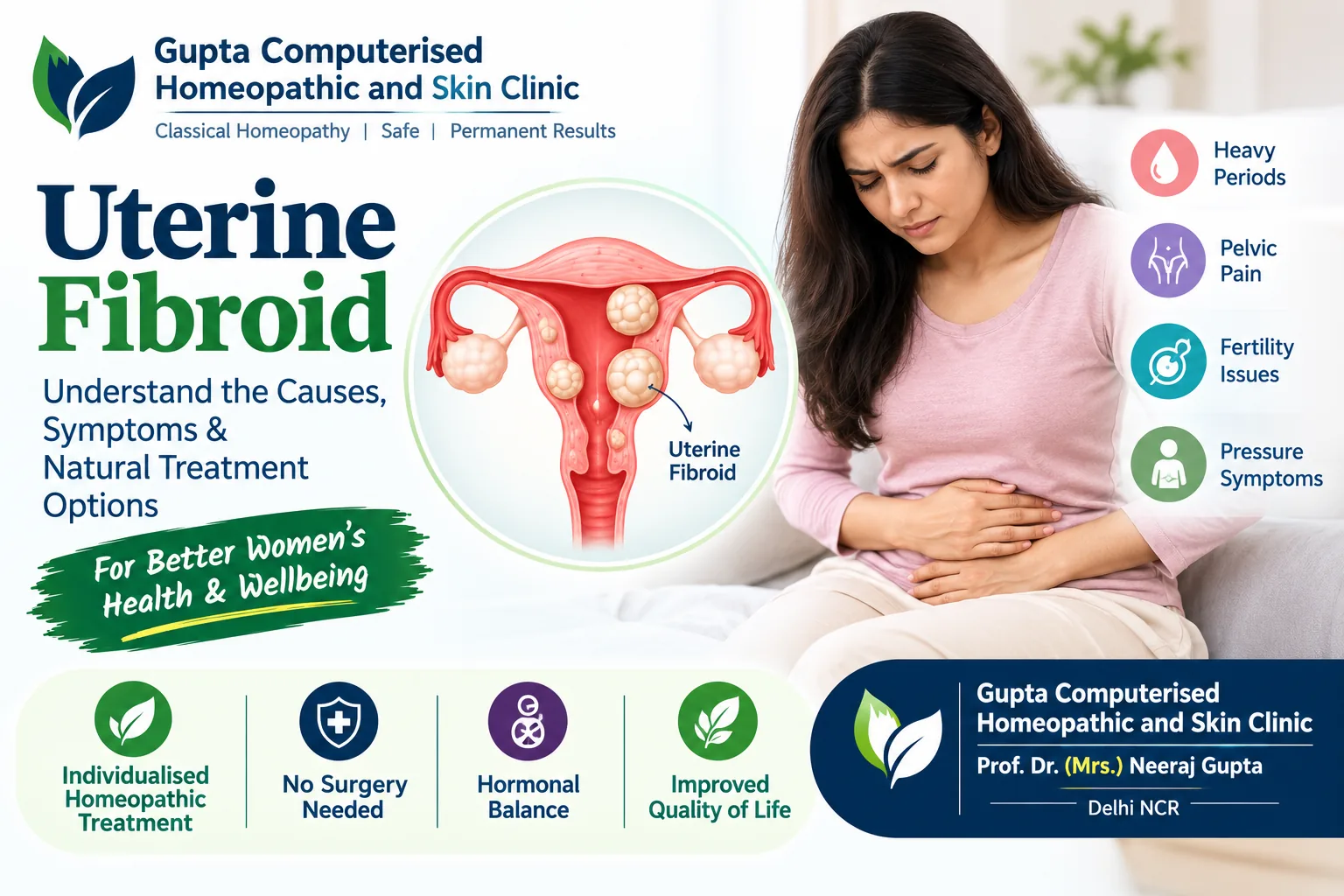
During a routine pelvic ultrasound examination, many women in their late 30s and 40s receive an unexpected diagnosis: 'Multiple uterine fibroids' or 'Large fibroid in the fundus with heavy bleeding.' While most conventional gynaecologists respond with reassurance that fibroids are 'benign,' the associated symptoms—excessive menstrual bleeding lasting 10–14 days, severe cramping that disrupts work, anaemia from iron loss, and the perpetual worry about surgical removal—create significant life disruption.
Understanding Uterine Fibroids: Benign But Problematic
Uterine fibroids (leiomyomas) are non-cancerous smooth muscle tumours that grow within the myometrium (muscular wall of the uterus). They are technically benign, but this does not minimise their clinical burden. Depending on their size, location (submucosal, intramural, or subserosal), and number, fibroids drive:
- Menorrhagia (heavy bleeding) — prolonged periods with passage of clots larger than a 50-paise coin
- Dysmenorrhea (severe cramps) — debilitating lower abdominal and back pain during periods
- Anaemia — chronic iron deficiency from persistent blood loss, causing fatigue and breathlessness
- Urinary Frequency — large intramural fibroids compressing the bladder, causing urgent frequent urination
- Infertility or Recurrent Pregnancy Loss — submucosal fibroids distorting the uterine cavity, preventing embryo implantation
- Pelvic Pain — chronic, non-menstrual pelvic discomfort from mass effect and nerve irritation
Why Conventional Strategies Fall Short
Standard gynaecological protocols typically offer two paths:
- Hormonal Suppression — birth control pills or GnRH agonists to shrink fibroids temporarily, but with risk of side effects (depression, weight gain, bone loss), and rebound growth after cessation
- Surgical Removal — hysteroscopic myomectomy (for submucosal fibroids), or myomectomy/hysterectomy (for larger intramural lesions). While effective at removing existing fibroids, surgery does not address the underlying tissue environment that permitted fibroid growth in the first place—leading to fibroid recurrence in 15–30% of cases within 5 years.
Constitutional homeopathy takes a fundamentally different approach: instead of removing or temporarily shrinking the fibroid mass, treatment aims to rebalance the oestrogen-progesterone milieu, restore uterine tissue resilience, reduce chronic pelvic inflammation, and support the body's natural reabsorption of fibroid tissue.
The Hormonal & Inflammatory Root of Fibroid Growth
Modern research confirms that fibroids thrive in environments characterised by:
- Oestrogen Excess — unopposed oestrogen stimulation of myometrial smooth muscle (due to obesity, liver congestion, or anovulatory cycles) drives fibroid cell proliferation
- Progesterone Resistance — reduced progesterone receptor expression in fibroid tissue, diminishing the natural anti-proliferative signals
- Chronic Inflammation — elevated inflammatory cytokines (IL-6, TNF-α, IL-8) in the endometrium and myometrium driving neovascularisation and fibroid expansion
- Angiogenesis (Abnormal Vessel Growth) — increased blood vessel formation within fibroid masses, intensifying menorrhagia and uterine ischaemia
- Myometrial Stiffness — loss of normal smooth muscle compliance, contributing to dysmenorrhea and infertility
In our clinical consultations across our Shakarpur East Delhi clinic and Vaishali Ghaziabad branch, we systematically evaluate:
- Menstrual Cycle History — age of menarche, cycle regularity, duration of heaviness, PMS patterns
- Constitutional Thermal Pattern — coldness vs. heat sensitivity, sweating tendency
- Emotional & Stress Patterns — long-standing anxiety, suppressed grief, relationship conflicts, or career pressure exacerbating pelvic congestion
- Digestive Health — constipation, gas, or sluggish liver function impeding detoxification and oestrogen recirculation
- Family History — predisposition toward autoimmune or inflammatory diseases
Patient Video Case Study: Fibroid Relief & Heavy Bleeding Resolution
Watch this patient testimonial on uterine fibroid with profuse and painful bleeding, successfully managed with homeopathic constitutional care:
▶️ Patient Recovery Case Study - Fibroid Relief
Real patient testimonial showing recovery from uterine fibroid with heavy, painful bleeding (77 seconds).
Classical Homeopathic Remedies for Fibroid-Related Pathology
The following constitutional remedies are frequently indicated in fibroid cases (individualised selection is essential):
- Thalassinum (Thyroidinum nosode) — when fibroids coexist with thyroid dysfunction, sluggish metabolism, or extreme cold intolerance
- Sabina — Right-sided pelvic pain with heavy, dark menses; bearing-down sensation; fibroids with stringy clots and intense tenesmus (false labour pains)
- Cimicifuga Racemosa (Actaea Racemosa) — fibroids with severe, winding dysmenorrhea; uterine pain radiating to thighs; restless, trembling anxiety
- Calcarea Carbonica — cold, sluggish patients with excessive periods, fibroids, obesity, and constipation; fundamental stagnation of pelvic circulation
- Lachesis — Left-sided fibroids with dark, clotted bleeding; bearing-down with back pain; heat intolerance; emotional jealousy or irritability
- Sepia — Fibroids in women with reproductive history changes, pelvic congestion, depression, and a 'sagging' sensation; often effective in post-partal fibroid recurrence
- Murex Purpurea — Intense sexual desire with fibroid uterus; heavy, dark periods; tumorous growths with pelvic heaviness
The Clinical Recovery Roadmap: What to Expect
Fibroid shrinkage and symptom normalisation typically follow these phases:
- Phase 1 (Months 1–2): Reduction in menstrual duration (from 12 days to 8–9 days) and clot passage. Dysmenorrhea pain decreases measurably, restoring sleep quality.
- Phase 2 (Months 3–4): Further normalisation of cycle length and flow. Haemoglobin begins rising as iron loss subsides; energy and cognitive clarity improve.
- Phase 3 (Months 5–8+): Pelvic ultrasound may show reduction in fibroid volume (especially submucosal fibroids). Menses become regular, painless, 4–5 day cycles with minimal clots.
📋 WhatsApp Your Latest Pelvic Ultrasound (USG) Report
Share your imaging and blood work (Hb, ferritin levels) for a confidential initial case feasibility assessment. Available at both clinic locations: Shakarpur (East Delhi) and Vaishali (Ghaziabad). Pan-India online consultations with medicine courier available.
WhatsApp your report: +91 9625350981
Educational Talk: Fibroid Growth & Non-Surgical Care Options
Learn the distinction between conventional management and homeopathic immune-balancing approaches:
▶️ Understanding Fibroid Growth & Non-Surgical Care
Educational overview comparing conventional and homeopathic approaches to fibroid management (15 seconds).
Comprehensive Doctor's Guide: Detailed Case Review & Patient Experience
See an in-depth clinical discussion including patient recovery milestones, common challenges, and long-term management strategy:
▶️ Detailed Doctor Guide & Patient Experience - Dr. Neeraj Gupta
Comprehensive consultation walkthrough showing fibroid case management from intake to recovery (77 minutes).
Frequently Asked Questions
**Can homeopathy shrink fibroids while I'm still taking oral contraceptives?** Yes. Homeopathic remedies work alongside hormonal contraception without interference. Over time, as menstrual normalisation occurs and constitutional balance improves, your gynaecologist can evaluate discontinuing or switching contraceptive methods.
**How long does it typically take to see fibroid shrinkage on ultrasound?** Symptomatic relief (reduced bleeding and pain) typically begins within 1–3 months. Measurable shrinkage on ultrasound imaging usually becomes apparent after 4–6 months of consistent constitutional treatment, as tissue reabsorption progresses.
**If I have a large fibroid (>4 cm) causing significant anaemia, can homeopathy really help?** Yes, provided the fibroid is not causing acute uterine rupture or haemodynamic instability. Large, intramural fibroids respond more gradually (6–12+ months) than smaller submucosal lesions. Concurrent iron supplementation and periodic Hb monitoring ensure anaemia does not worsen during treatment.
**Can homeopathy help restore fertility if my fibroid is distorting the uterine cavity?** Yes. Submucosal fibroids obstructing the cavity or intramural fibroids causing significant distortion can be effectively reabsorbed via constitutional treatment. Once cavity distortion improves, embryo implantation potential improves significantly, often leading to natural conception within 6–12 months of treatment.
**Will I need surgery after homeopathic treatment?** The goal of constitutional homeopathy is to avoid surgery altogether by reabsorbing fibroid tissue and stabilising the myometrium. In cases where a fibroid remains large but asymptomatic (no bleeding, pain, or infertility), continued conservative management is appropriate. Emergency surgery is only considered if acute complications (uterine rupture, severe uncontrollable bleeding) arise—which is rare with homeopathic care.
---
*Disclaimer: Homeopathic treatment is individualised based on comprehensive case evaluation and gynecological imaging. This article is educational and does not replace professional medical consultation or conventional emergency gynecological care.*
*For specialised fibroid consultations with Prof. Dr. (Mrs.) Neeraj Gupta (30+ years clinical experience), visit Gupta Computerised Homeopathic and Skin Clinic at Shakarpur, East Delhi or Vaishali, Ghaziabad. Consultations, ultrasound report reviews, and medical courier for pan-India patients: +91-96253-50981.*
Ready to treat the root cause?
Book a consultation with Prof. Dr. (Mrs.) Neeraj Gupta at our Shakarpur or Vaishali clinic.
Book Your Fibroid ConsultationExplore more: